Diverge UX: An AI-powered design space explorer
I built an exploratory proof of concept that maps prompts into design dimensions and generates comparable low-fidelity UI patterns before high-fidelity output.
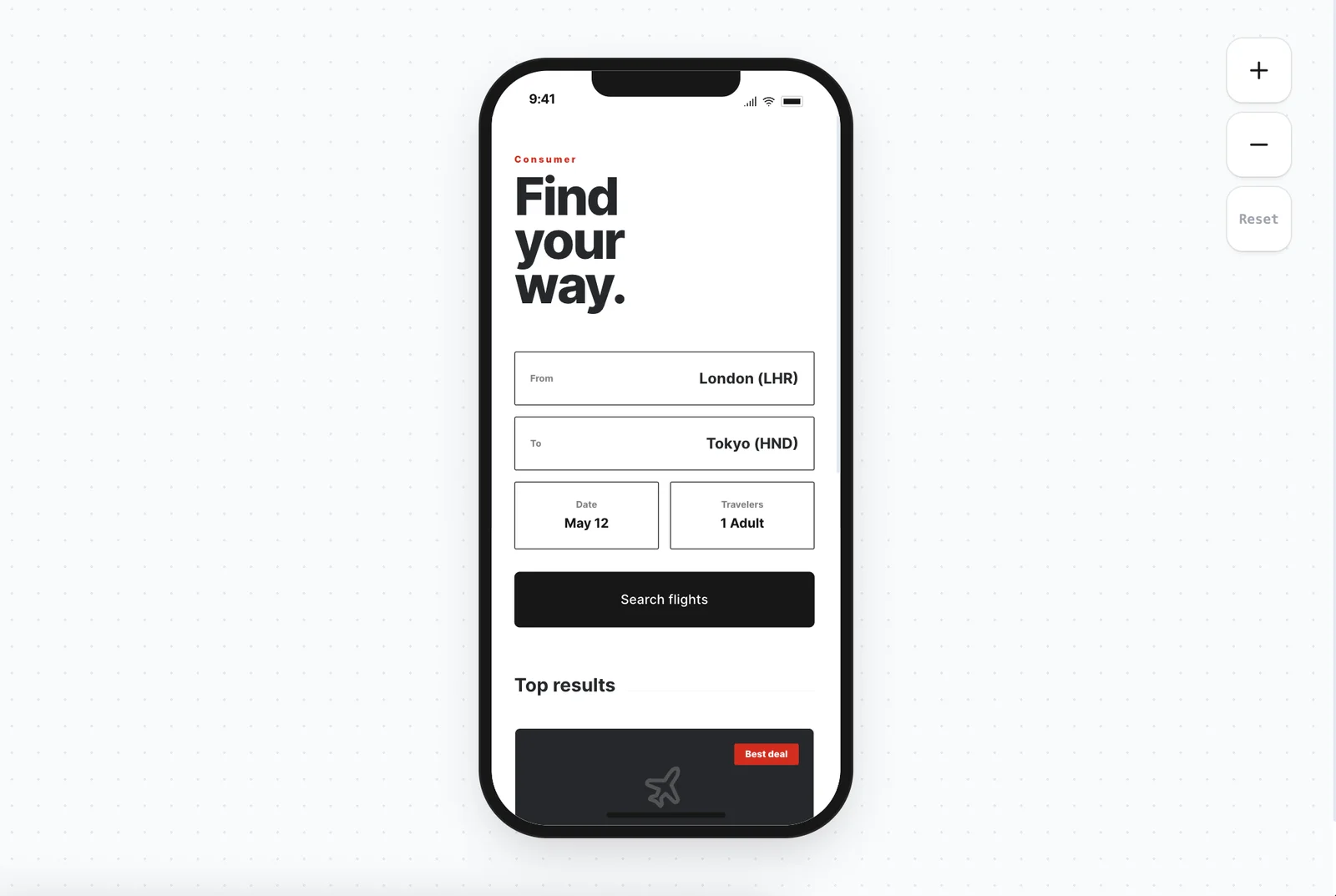
Diverge UX explores how an AI-assisted design-space tool might reduce premature convergence and make text-to-UI generation more transparent.
The prototype tests an interaction model in which UX professionals map design dimensions, compare UI patterns, and choose a direction before committing to high-fidelity output.
Its intentional friction explores a 'human-in-the-loop' approach intended to give designers greater control over design decisions and their rationale.
Because the concept has not undergone formal research or usability testing, these statements describe the intended interaction rather than validated user outcomes.
Diverge UX was designed in Figma, vibe-coded with Gemini CLI, and hosted on Netlify. Try the proof of concept in the interactive prototype below.
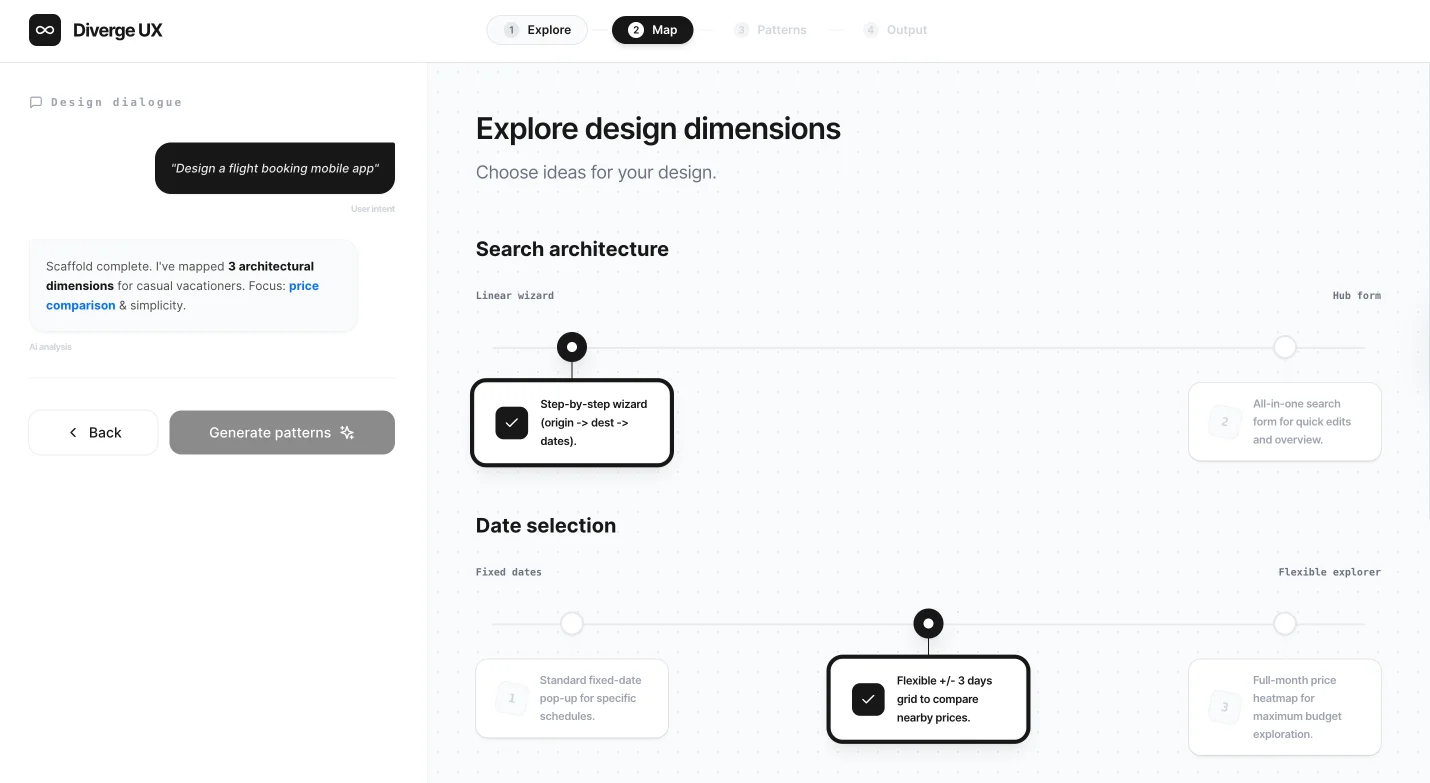
Visual mapping of design dimensions
The tool analyses the user’s prompt and breaks the design idea into explicit dimensions so designers can examine the rationale behind different directions.
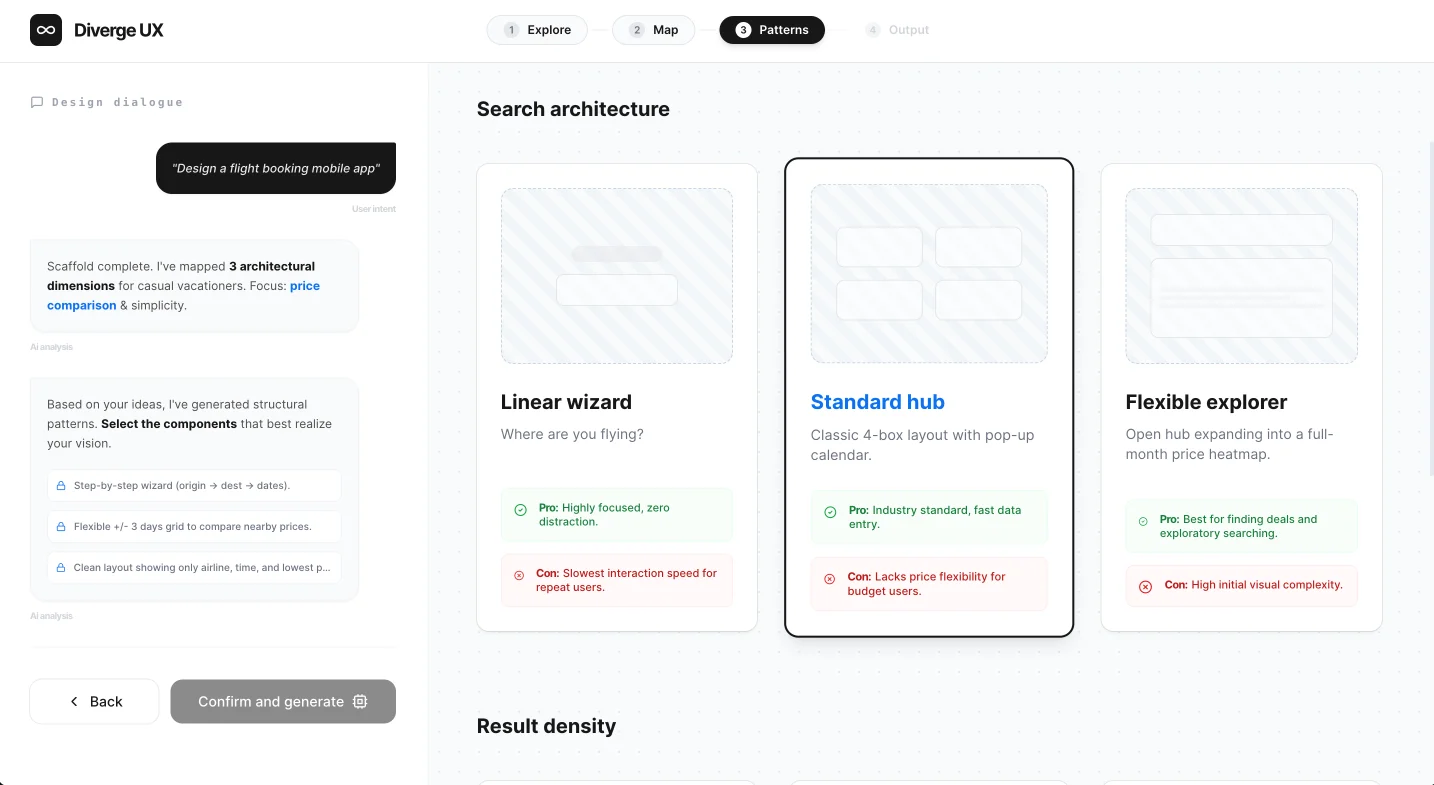
Contextual design pattern generation
Based on the selected dimensions, the tool generates low-fidelity patterns with stated pros and cons for comparison before high-fidelity generation.
Interested in working together? Reach out at y3vu060312@gmail.com or connect on LinkedIn.